

How to Get Citizenship in Vietnam: What to Know
Learning how to get citizenship in Vietnam allows foreign nationals to gain full legal rights, own property without restrictions, and live in the country without visa concerns. Before completing a long-term immigration process, some travelers may need to explore urgent visa processing options to maintain legal entry into Vietnam. Under Law No. 79/2025/QH15, eligible applicants must meet requirements related to residency, language proficiency, legal compliance, and documentation. This guide from Wexplore Vietnam explains the eligibility criteria, required documents, and application process to help you navigate Vietnamese citizenship successfully.
Who Can Apply for Vietnamese Citizenship?
Under the Law on Vietnamese Nationality, foreigners, overseas Vietnamese, and some stateless persons can get Vietnamese citizenship. They must meet rules on civil capacity, residence, language, conduct, and financial stability. The law applies to three distinct groups: standard foreign applicants seeking naturalization, former Vietnamese citizens seeking restoration, and individuals with Vietnamese lineage.
The information here on getting Vietnamese citizenship reflects official public rules and trusted legal commentary. It is not a substitute for legal advice from a qualified Vietnamese attorney.
Main paths to acquire or regain Vietnamese citizenship
Vietnamese nationality acquisition follows three legally distinct routes under the Law on Vietnamese Nationality (2008, as amended by Law No. 79/2025/QH15):
- Naturalization is the standard path for foreign nationals with no Vietnamese lineage. It requires meeting all general eligibility conditions, including a five-year permanent residence requirement and Vietnamese language proficiency.
- Citizenship restoration applies to overseas Vietnamese (Việt Kiều) and former citizens who previously held Vietnamese nationality and lost or renounced it.
- Birthright and lineage citizenship applies to children born to at least one Vietnamese parent, regardless of birthplace. This guide focuses primarily on naturalization and restoration, as these are the actionable paths for most readers.
General eligibility conditions for naturalization in Vietnam
Standard naturalization in Vietnam rests on five core pillars, consistently referenced across official sources including the Ministry of Foreign Affairs of Vietnam and major legal commentary:
- Full civil act capacity: the applicant must be a legal adult of sound mind.
- Law compliance: a clean record of observing Vietnamese law and social norms.
- Vietnamese language proficiency: sufficient to communicate in daily life, aligned with the Vietnamese Language Proficiency Framework.
- Five-year permanent residence: holding a valid permanent residence requirements status in Vietnam for at least five consecutive years before applying.
- Livelihood and financial capacity: demonstrable ability to support oneself financially.
Applicants must also choose a Vietnamese name. They must provide clean criminal record certificates from Vietnam and their home country.
Required Documents for Obtaining Vietnamese Citizenship
To apply for Vietnamese citizenship, you must submit a structured dossier including an application form, identity and birth documents, judicial records, residence and financial proof, and evidence of Vietnamese language ability, with all foreign papers legalized and translated. If you are researching how to get citizenship in Vietnam, preparing a complete and compliant application is one of the most important steps.
Core dossier for a standard naturalization application
The following documents are required for virtually all Vietnamese nationality applications. This checklist reflects guidance consistently cited across official and legal-firm sources:
- Citizenship application form: the official form issued by the Department of Justice Vietnam or Vietnamese diplomatic missions.
- Curriculum vitae (CV): a personal history statement covering education, employment, and residence, signed and certified.
- Valid passport and birth certificate: originals or certified copies; foreign documents must undergo consular legalization and certified translation.
- Recent passport-sized photographs: typically four photos meeting official specifications.
- Criminal record check / police clearance: from both Vietnam (issued by the Ministry of Public Security Vietnam or provincial police) and your country of origin.
- Proof of permanent residence: a valid Vietnam resident card demonstrating at least five years of continuous permanent residency.
- Proof of financial capacity: bank statements, employment contracts, or other evidence of stable livelihood.
- Vietnamese language proficiency proof: a certificate or documented evidence of language ability.
- Proposed Vietnamese name: a written declaration of the Vietnamese name the applicant intends to adopt.
All documents must be current, authentic, and free of alterations.

Additional documents for spouses, children, and overseas Vietnamese
Different applicant personas must supplement the core dossier with persona-specific papers.
- Spouses of Vietnamese citizens must provide a certified marriage certificate. They must also provide proof of the spouse’s current Vietnamese nationality.
- Children and parents applying through family ties need birth certificates and certified household registration documents establishing the family relationship.
- Overseas Vietnamese pursuing citizenship restoration must provide evidence of previous Vietnamese citizenship along with proof of current overseas residence. Separate implementing decrees under the Law on Vietnamese Nationality govern these citizenship restoration procedures.
The table below summarizes the core document requirements for anyone researching how to become a citizen of Vietnam, providing a fast reference to the essential paperwork needed for a citizenship application.
| Document | Issuing Authority | Key Notes |
| Application form | Dept. of Justice / Embassy | Use the current official version |
| Birth certificate | Home country civil registry | Must be legalized + translated |
| Criminal record check | Ministry of Public Security VN + home country police | Both countries required |
| Permanent residence proof | Vietnam Immigration Dept. | Min. 5-year validity window |
| Financial capacity proof | Bank / Employer | Statements covering recent period |
| Language proficiency cert. | Authorized testing body | Aligned with VN Language Framework |
| Marriage/family documents | Civil registry (home or VN) | For spouse/child/parent applicants only |
How to Apply for Vietnamese Citizenship
If you are learning how to get citizenship in Vietnam, it is important to understand that the process follows a fixed sequence: prepare and legalize your dossier, submit it to the provincial Department of Justice or a Vietnamese mission abroad, undergo security and background checks, then wait for review by the Ministry of Justice and final approval by the President of Vietnam.
Step 1: Prepare Your Documents
Begin by assembling every required document, then complete the consular legalization and certified translation of all foreign-issued papers. Double-check that no document has expired and that all translations are certified by an authorized body in Vietnam.
Step 2: Submit Your Citizenship Application
Where to submit depends on your location. If you are residing in Vietnam, file your dossier in person at the provincial Department of Justice (Sở Tư pháp) in the province where you hold your permanent residence in Vietnam.
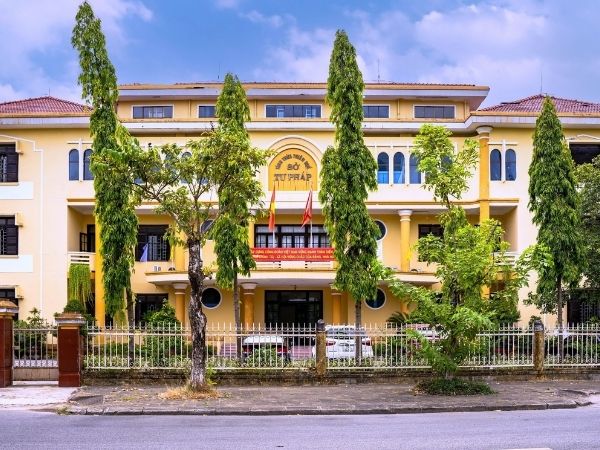
If you are living abroad, you may start the application at the nearest Vietnamese embassy or consulate. They will forward your file to the relevant authorities in Vietnam. Confirm submission procedures directly with the receiving office, as practices can vary by province.
Step 3: Background Verification by Local Authorities
Once we receive your dossier, Vietnam’s Ministry of Justice sends it to provincial police. It also goes to the Ministry of Public Security for background checks.
This stage involves checking your criminal record, confirming your residential history, and verifying the authenticity of your submitted documents. The security check typically covers both your conduct within Vietnam and, where possible, information from your country of origin.
Step 4: Review by the Ministry of Justice
After the security stage, the Ministry of Public Security issues a formal opinion. The Ministry of Justice of Vietnam then reviews the full dossier. It checks whether the person meets all conditions for Vietnamese citizenship. It then sends a recommendation to the Government.

For those exploring how to get citizenship in Vietnam, this inter-agency review is typically the longest stage of the application. Incomplete or inconsistent documentation remains the primary cause of processing delays.
Step 5: Final Submission and Decision
The Ministry of Justice submits its recommendation to the Government. The Government forwards it to the President of Vietnam for the final decision. A presidential decision grants citizenship and serves as the legally binding instrument that confers Vietnamese national status.
Many official guides and legal-firm summaries reference a processing timeline of approximately 115 working days from the date of a complete, valid submission, though real-world timelines can extend beyond this depending on dossier completeness, provincial workloads, and the complexity of individual cases.
Step 6: Vietnamese Citizenship Grant
After the President issues the decision, you register your new Vietnamese citizenship at the local People’s Committee. You then update your civil status records. You also become eligible to apply for a Vietnamese national ID card and passport. At this stage, you must also address any obligations regarding your original nationality, including renunciation if required.

Special Cases: Retaining Foreign Citizenship
Anyone researching how to get citizenship in Vietnam should also understand the country’s nationality policy. Vietnam keeps a general “one nationality” principle, but under the 2025 amendments, the President can allow some naturalized or restoring citizens to retain their original citizenship in strictly defined special cases.
The “one nationality” principle and dual citizenship exceptions
Vietnam’s default legal position is that Vietnamese citizens hold one nationality. When a foreigner naturalizes as Vietnamese, they generally must renounce their original citizenship. Vietnamese citizenship without renunciation is not the standard outcome.
However, the law grants the President of Vietnam discretionary power to approve dual nationality retention in special cases. Categories more likely to qualify for this presidential exception include:
- Spouses, children, or parents of Vietnamese citizens;
- Individuals making major investments or meritorious contributions recognized as serving the national interest;
- Certain overseas Vietnamese may keep their foreign nationality if it benefits the prestige of the Socialist Republic of Vietnam.

Special treatment for overseas Vietnamese and citizenship restoration
When learning how to get citizenship in Vietnam, overseas Vietnamese should note that they occupy a distinct legal position. Those who never formally relinquished Vietnamese citizenship may register to retain Vietnamese citizenship through Vietnamese representative missions abroad rather than going through full naturalization. This registration pathway is separate from the naturalization process and generally involves lighter documentation and procedural requirements.
Former Vietnamese citizens who gave up or lost their nationality can apply to restore Vietnamese citizenship. The 2025 law updates allow this under more flexible conditions in Vietnam. Under Law No. 79/2025/QH15, restoration applicants face easier residence and language requirements than standard naturalization applicants.

Comparing standard naturalization and “favored” paths
The table below compares the three main routes to get citizenship. It highlights key eligibility rules. This helps applicants find their most likely path:
| Dimension | Standard Naturalization | Spouse / Child of Citizen | Overseas Vietnamese Restoration |
| Residency requirement | 5-year permanent residence | Reduced / may be exempt | Flexible under 2025 law |
| Language requirement | Required | May be exempt | Reduced conditions |
| Document load | Full dossier | Full + family proof | Full + prior citizenship proof |
| Dual nationality chances | Very limited | Limited (presidential approval) | Possible in defined cases |
| Primary legal basis | Law on Vietnamese Nationality | Exemption provisions | Restoration provisions, Law No. 79/2025/QH15 |
FAQs About How to Get Citizenship in Vietnam
This section answers the most common short questions about how to get Vietnam citizenship, from basic eligibility to marriage routes, dual nationality, residency, and timelines, in concise, self-contained Q&A pairs.
Can foreigners get citizenship in Vietnam?
Foreigners can apply for Vietnamese citizenship through naturalization if they satisfy all legal conditions: full civil act capacity, five years of permanent residency, Vietnamese language proficiency, a clean criminal record, and financial self-sufficiency.
How long does it take to get Vietnamese citizenship?
The official processing timeline takes about 115 working days after the authorities accept a complete dossier. This estimate comes from several legal-firm guides and procedure references.
Real-world timelines often run longer than this estimate. This is due to inter-agency checks, dossier fixes, and provincial processing limits. Applicants should plan for six months to over a year. This period runs from the first submission to the presidential decision.
Can I get Vietnamese citizenship by marriage?
Marriage to a Vietnamese citizen does not automatically grant citizenship, but it does create significant advantages. Foreign spouses may be exempt from the five-year residency requirement and the Vietnamese language test. This can make the Vietnam citizenship process much more accessible. The application still requires meeting temporary residence card requirements or maintaining permanent residence status.
Does Vietnam allow dual citizenship?
Vietnam’s default rule allows only one nationality, so most new citizens must renounce their original passport. Dual nationality retention is only possible with clear presidential approval. This approval is given only in special cases. These cases include family ties to Vietnamese citizens or proven contributions to national interests.
Do I need to live in Vietnam before applying for citizenship?
Yes, standard naturalization requires five years of continuous permanent residency in Vietnam. You must show valid long-term legal status and a permanent residence card. Spouses of Vietnamese citizens and individuals with meritorious contributions may qualify for exemptions from this requirement.
Understanding how to get citizenship in Vietnam is the first and most important step toward building a long-term life in Vietnam. While the legal process requires careful preparation and patience, it offers lasting security and peace of mind. This guide from Wexplore Vietnam gives a clear overview of eligibility, needed documents, and dual citizenship exemptions. It helps you prepare with confidence to become an official member of the Vietnamese community.