

Border Crossings: Traveling from Laos and Cambodia to Vietnam
Navigating from one country to another will cost you time and effort, as well as a lot of interest. After spending a few weeks in one place and getting used to its currency, food, and people, at some point, you have to bid your sad goodbyes and move forward with your travels. What is the cheapest way to reach your next neighboring destination? Cross the border! For young backpackers and travelers who are moving slow, crossing the border is the best way to get to your next stop.
Flying into Vietnam from Laos or Cambodia can be expensive, while crossing the border by bus or other overland transport can save you at least half the price of a flight ticket. However, the drive can take anywhere from 6 to 27 hours depending on the route—so prepare yourself with a book or two, crisps, biscuits, and heaps of patience for this trip!
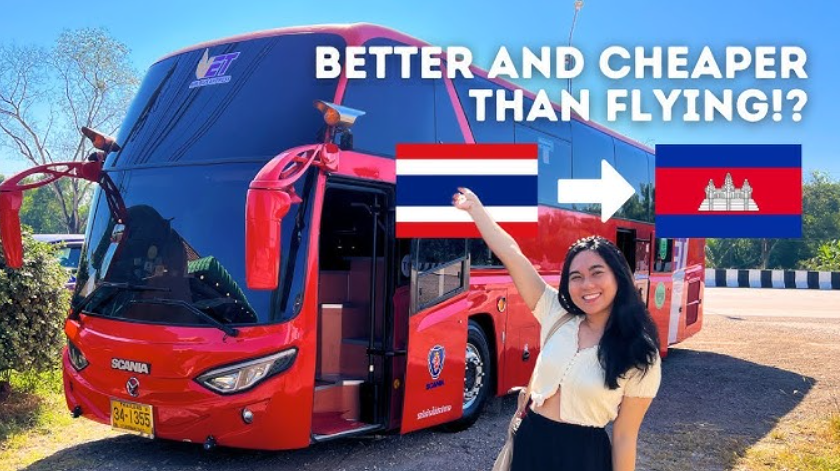
In this article, we’ll cover the complete, step-by-step guide to visa requirements and border crossings from Laos to Vietnam and Cambodia to Vietnam. Keep reading for practical tips to make your journey smooth and affordable.
Visa Requirements for Entering Vietnam
NOTE: If you don’t need a visa (depending on how long you will stay and your nationality), you may skip this part and proceed to the Border Crossing sections below.
Vietnam’s visa policies can vary by nationality and stay duration. As of December 2025, citizens of many countries, including the Philippines, can enter Vietnam visa-free for short stays. For example, as a Filipino passport holder, you can stay in Vietnam for up to 21 days without a visa. However, if you intend to stay longer, you must apply for a visa in advance through a consulate, embassy, or online e-visa system. You can check the visa examption here.
To apply for a Vietnam visa, the official and most reliable method is through the Vietnam National Electronic Visa system at evisa.gov.vn. This e-visa is available to citizens of all countries and allows stays of up to 90 days with single or multiple entries. The process is straightforward:
- Visit the official website (evisa.gov.vn) and fill out the online application form.
- Upload a scanned copy of your passport (valid for at least 6 months from your arrival date) and a recent photo.
- Pay the fee: $25 USD for a single-entry visa or $50 USD for a multiple-entry visa.
- Receive your e-visa approval via email within 3-5 working days.
Third-party agencies can assist, but for security and to avoid scams, stick to the official portal. If you’re applying from Laos or Cambodia, you can do this online before your trip—no need to visit an embassy unless required for your nationality.
Important Notes: When crossing into Vietnam by land, you must apply for your Vietnam visa and get the appropriate documents in advance to pass the border. If you do not, the bus will not wait for you, and you will not be refunded for the cost of the trip. Always check the latest requirements, as policies can change—especially for border entries
1. Laos to Vietnam Border Crossing
Crossing from Laos to Vietnam by land is a popular choice for budget travelers, offering scenic routes through mountains and rural areas. It’s significantly cheaper than flying but requires more time. For instance, a flight from Vientiane (Laos) to Hanoi (Vietnam) might cost $70-220 USD and take about 1-2 hours, while a bus can cost $30-50 USD but takes 20-27 hours.
Popular Border Crossings
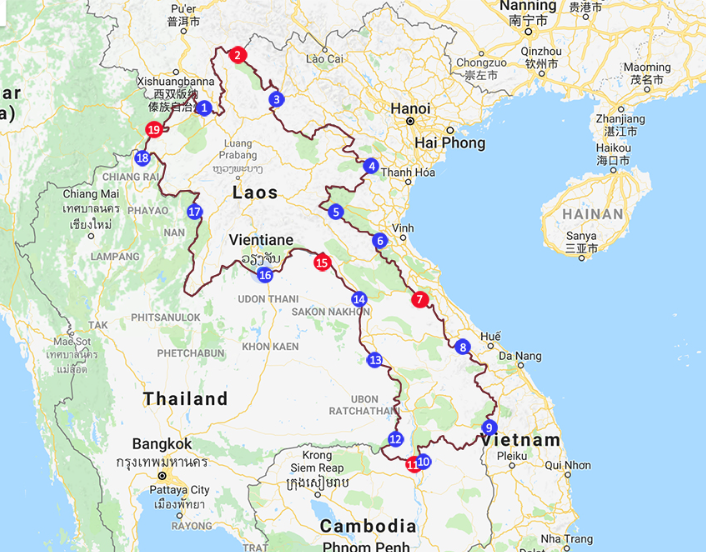
There are several international border points between Laos and Vietnam. Here are the most commonly used for travelers:
- Nam Phao – Cau Treo: Ideal for routes from Vientiane or Thakhek (Laos) to Vinh (Vietnam). Open daily from 7 AM to 5 PM.
- Dansavanh – Lao Bao: Connects Savannakhet (Laos) to Dong Ha or Hue (Vietnam). Popular for central routes; open 7 AM to 6 PM.
- Bo Y – Kon Tum: For southern crossings from Pakse (Laos) to Pleiku (Vietnam). Less crowded; open 7 AM to 5 PM.
Step-by-Step Guide
- Book Your Transport: From major Lao cities like Vientiane, book a sleeper bus to Hanoi or Hue via companies like The Sinh Tourist or local operators. Tickets are available at bus stations or online (e.g., 12go.asia). Expect to pay $30-50 USD.
- Prepare Documents: Ensure your passport is valid for 6+ months, and have your Vietnam e-visa printed if needed. Lao exit stamps are free, but Vietnam entry might require a small fee (around $1-2 USD for “stamping”).
- At the Border: Buses stop at the Lao side for exit procedures (30-60 minutes). Walk or shuttle across the neutral zone, then handle Vietnam immigration. Be prepared for bag checks and potential bribes (though rare in 2025—report if encountered).
- Continue the Journey: Reboard the bus and head to your destination. Bring water, snacks, and entertainment for the long ride.
Tips: The journey can be bumpy, especially in rainy seasons (May-October), with possible river crossings. Opt for overnight buses to save on accommodation. If you’re adventurous, consider motorbiking across (with proper permits).
2. Cambodia to Vietnam Border Crossing
Moving from Cambodia to Vietnam is quicker and more straightforward than from Laos, making it ideal for shorter hops. A bus from Phnom Penh to Ho Chi Minh City (HCMC) costs $20-35 USD and takes 6-7 hours, compared to a flight at $140-290 USD for just 1.5 hours.
Popular Border Crossings
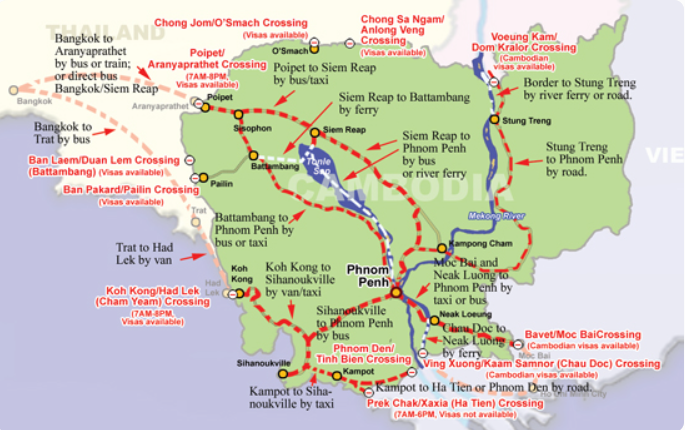
Key points for overland travel:
- Bavet – Moc Bai: The main crossing for Phnom Penh to HCMC. Busy but efficient; open 6 AM to 10 PM.
- Ha Tien – Xa Xia: For routes from Kep or Kampot (Cambodia) to Phu Quoc or the Mekong Delta (Vietnam). Open 7 AM to 5 PM.
- Trapeang Phlong – Xa Mat: Less common, connecting Kampong Cham (Cambodia) to Tay Ninh (Vietnam).
Step-by-Step Guide
- Book Your Transport: From Phnom Penh or Siem Reap, book buses via Giant Ibis, Mekong Express, or apps like BookMeBus. Fares range from $20-35 USD for premium seats.
- Prepare Documents: Cambodian exit is free; have your Vietnam e-visa ready. Fill out arrival forms on the bus.
- At the Border: Buses handle group processing—exit Cambodia, cross the border (often on foot), then enter Vietnam (30-45 minutes total). Watch for overcharging on “health checks” (usually unnecessary).
- Continue the Journey: Arrive in HCMC or other spots. For Mekong Delta extensions, transfer buses.
Tips: Borders operate normally in 2025, but arrive early to avoid crowds. If traveling with kids, note half-price fares. Eco-friendly options like shared vans are available for smaller groups.
Final Tips for a Smooth Trip
- Budget Breakdown: Expect to save 50-70% by choosing buses over flights, but factor in food ($5-10/day) and potential border fees ($1-5).
- Health and Safety: Carry cash (USD or local currency), wear comfortable clothes, and stay hydrated. Borders are safe, but use reputable transport.
- Updates: Always verify bus schedules and visa rules via official sites, as things can change.
I hope this article will be useful for your trips! Safe travels and enjoy the adventure of Southeast Asia’s borders.